
Hello, how the hell are you?
If this is your first time here, thanks for stopping by. In this blog, we’re going to look at what the future of computing looks like for the everyday user. I say everyday user because I’m not looking at this from a tech nerd’s point of view or the traditional desktop computer way. I’m looking at it from the perspective of the guy or gal who wants a device for occasional writing, light data processing, and, let’s be honest, mainly surfing the web and watching videos. But the device still has to be powerful enough to handle real work when you need it to.

Why the iPad Represents the Future of Computers
Enter the iPad — a device that started as a data pad on Star Trek and has now become the one machine that can do all of those tasks. The fact is, the iPad is the tool that lets you game, write a blog, watch your favorite shows, research topics, and of course, scroll social media.
The first time I noticed the iPad form factor was watching Star Trek. That light, slim, powerful handheld computer — that was the dream. And now, here I am using it daily. The iPad is that computer. It’s wild to think about how much our current mobile devices were inspired by science fiction. Even the cellphone came from Star Trek — remember the flip communicator that Captain Kirk used to contact the ship?
Sci-Fi and the Evolution of User Experience
So, yeah — sci-fi shows have a lot to do with the way we interact with our tech today. Look at Minority Report with Tom Cruise — that whole idea of a floating, transparent screen you manipulate with your hands? We’re almost there.
All these daily interactions with our phones, tablets, and computers have moved us toward wanting machines that are not just tools, but companions. The data we keep on our smartphones is deeply personal — it’s our digital life. That makes them our first computer now, and the bigger machines are just there to do the heavy lifting.

The Power of Touch: iPad’s Real Advantage
The iPad was laughed off years ago as “just a big iPhone,” but that idea is outdated. It has evolved into something much more. It’s still growing and trying to find its place, but it’s getting close. The big reason I keep saying the iPad is the future of computing is because of the touch interface.
Touch is powerful for us. It’s how we connect — with people, with moments, and now, with our computers. It creates a bond. Yeah, I know the iPad is just a machine, but let’s be real — it becomes a part of who you are.
Learning to Use the iPad Like a Real Computer
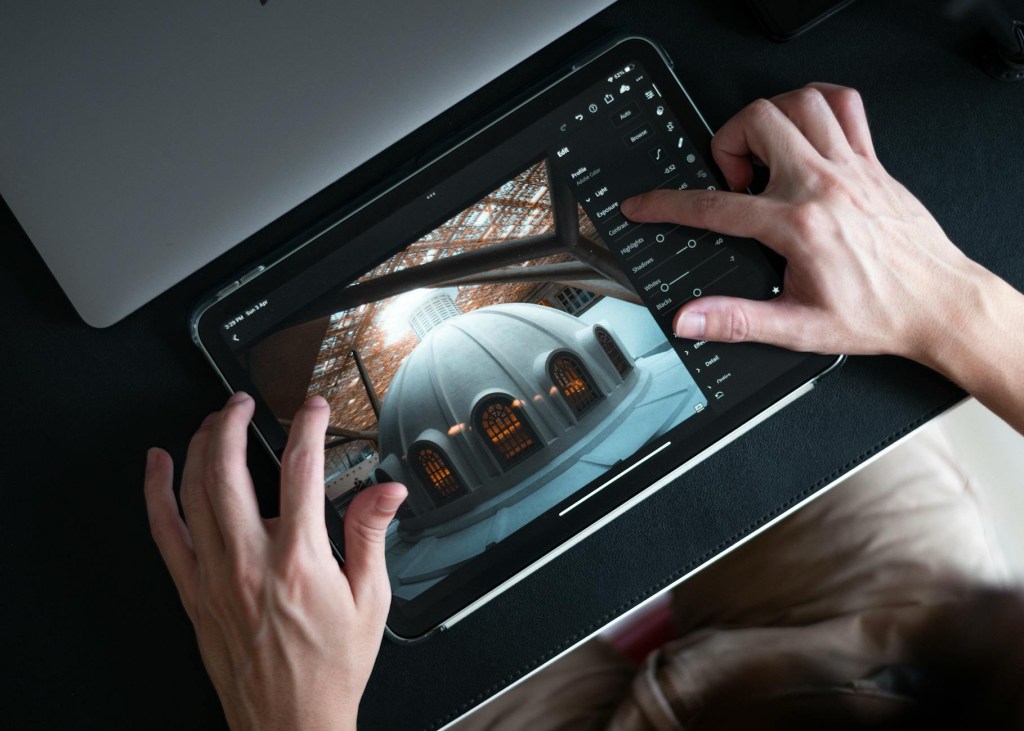
The iPad’s way of letting you interact with it — that combo of touch and traditional computing — is hard to explain unless you’ve used it long enough. Pressing and holding for a right-click? That’s different. You’re used to using a trackpad or mouse. But on the iPad, it’s your finger that does the work.
Once you learn the gestures and how to work with the interface, you’ll start to see how this is actually a real computer. It’s just different. Moving files, highlighting text, copy/paste — all of that happens through touch. When I need precise control, I’ll just grab the Apple Pencil. Simple.
Bridging the Gap Between Tablet and Desktop
The iPad used to be called “a big iPhone,” and that stigma is still out there. But with the newer versions of iPadOS bringing in multitasking features and M-series chips, the iPad is finally stepping up as a full-on computer.
It took years — 15 of them — to get here, and I’ve waited that long because I always wanted this kind of device: an 11-inch screen with desktop-class power, wrapped in a lightweight shell. The iPad Air M3 finally checks all those boxes for me.
Final Thoughts: What’s Your Perfect Computer?
So yeah, the future of computing is here — and it looks like an iPad to me. But that’s just my opinion.
What matters most is how you want to interact with your machine. Maybe you love the traditional setup. Or maybe, just maybe, you’re like me and you’ve been waiting for that one screen to do it all. The iPad is that screen for me.
So let me know — what’s your perfect computer? Drop a comment.
 LocalNavy433 Photography
Leave a comment